The Case for Booking Direct with Katiliya: Better Rates, Estate Access and Exclusive Perks
June 21, 2026
Thailand has no shortage of beautiful temples, but Chiang Rai’s are different. Here, faith and contemporary art meet in the most extraordinary ways — temples conceived by visionary artists, painted in colours you have never seen on a place of worship, and filled with imagery that is by turns dazzling, dreamlike and deeply moving.
Three of them sit at the very top of every Chiang Rai itinerary: the gleaming White Temple, the cobalt Blue Temple, and the brooding Black House. Visited together, they form one of the most memorable days you can spend in northern Thailand. Here is what makes each one special, and how to see them all without rushing.
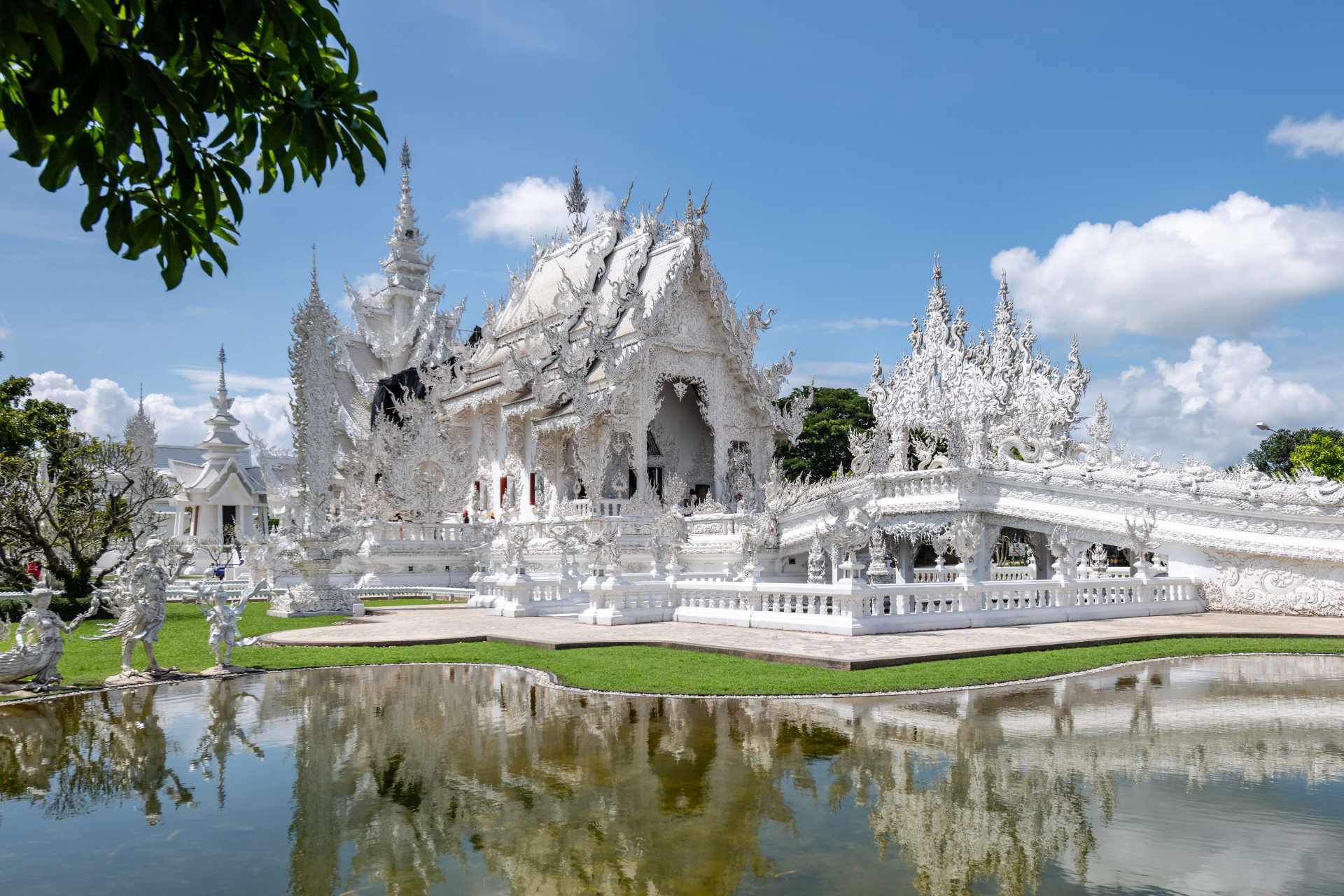
If you see only one temple in Chiang Rai, make it this one. Wat Rong Khun — the White Temple — is the life’s work of Thai artist Chalermchai Kositpipat, who began building it in the late 1990s and continues to expand it to this day. From a distance it appears almost unreal: a pure white temple encrusted with tiny mirrored fragments that catch the sunlight and scatter it in every direction.
The white symbolises the purity of the Buddha; the mirrors, his wisdom shining across the earth. To reach the main hall, you cross a bridge over a sea of reaching, outstretched hands — a striking representation of human desire and the path away from it. Inside, the murals blend traditional Buddhist scenes with surprising modern imagery, a reminder that this is a living, evolving artwork as much as a sacred space.
A few practical notes: as an active temple, modest dress is required — shoulders and knees covered — and there is a quiet etiquette to observe inside the main hall, where photography is generally not permitted. Arrive early to beat both the heat and the crowds; the temple is at its most serene in the soft light of morning.
A short drive from the White Temple lies its vivid counterpart. Wat Rong Suea Ten — the Blue Temple, whose name means “House of the Dancing Tiger” — is a riot of deep sapphire and gold. Where the White Temple dazzles with light, the Blue Temple glows with colour, every surface painted in rich cobalt and detailed with intricate patterns.
At its heart sits a luminous white Buddha, serene against the blue, in one of the most photogenic temple interiors in all of Thailand. Built more recently by a student of the White Temple’s creator, it carries the same spirit of bold artistic reinvention. It is smaller and quieter than its famous neighbour, which makes it all the more rewarding — a place to linger rather than tick off.
The third point of the trio is, strictly speaking, not a temple at all — and that is precisely the point. Baan Dam, the Black House, is the creation of the late artist Thawan Duchanee, and it stands as a deliberate, shadowy counterweight to the White Temple’s light.
It is not a single building but a sprawling collection of dark structures set in gardens, filled with the artist’s striking and sometimes confronting collection of bones, hides, horns and carved wood. Some find it haunting, others spellbinding; almost everyone finds it unforgettable. Where the White Temple speaks of purity and the heavens, the Black House explores the darker, earthier sides of human nature. Seen together, the two offer a genuine meditation on light and shadow — a conversation between two of Thailand’s great artists.
If you have time, add a fourth stop to your day. Wat Huay Pla Kang is crowned by an enormous, gleaming white statue of Guan Yin, the Goddess of Mercy, visible for miles across the surrounding countryside. You can ride a lift up inside the statue for sweeping views, and the elegant nine-tiered pagoda nearby is beautiful in its own right. It sees fewer international visitors than the famous three, which makes it a peaceful and rewarding addition.
The good news is that these sites sit close enough together to comfortably combine in a single day. A relaxed and rewarding order is to begin at the White Temple early, when the light is soft and the crowds are thin, move on to the Blue Temple, pause for a leisurely northern lunch, and finish at the Black House in the afternoon. Add Wat Huay Pla Kang if your energy and your schedule allow.
A few tips to make the day smoother:
A day among Chiang Rai’s temples is uplifting, but it is also a full one — plenty of walking, plenty of sunshine, plenty to take in. The pleasure of it doubles when you have somewhere genuinely restful to come home to.
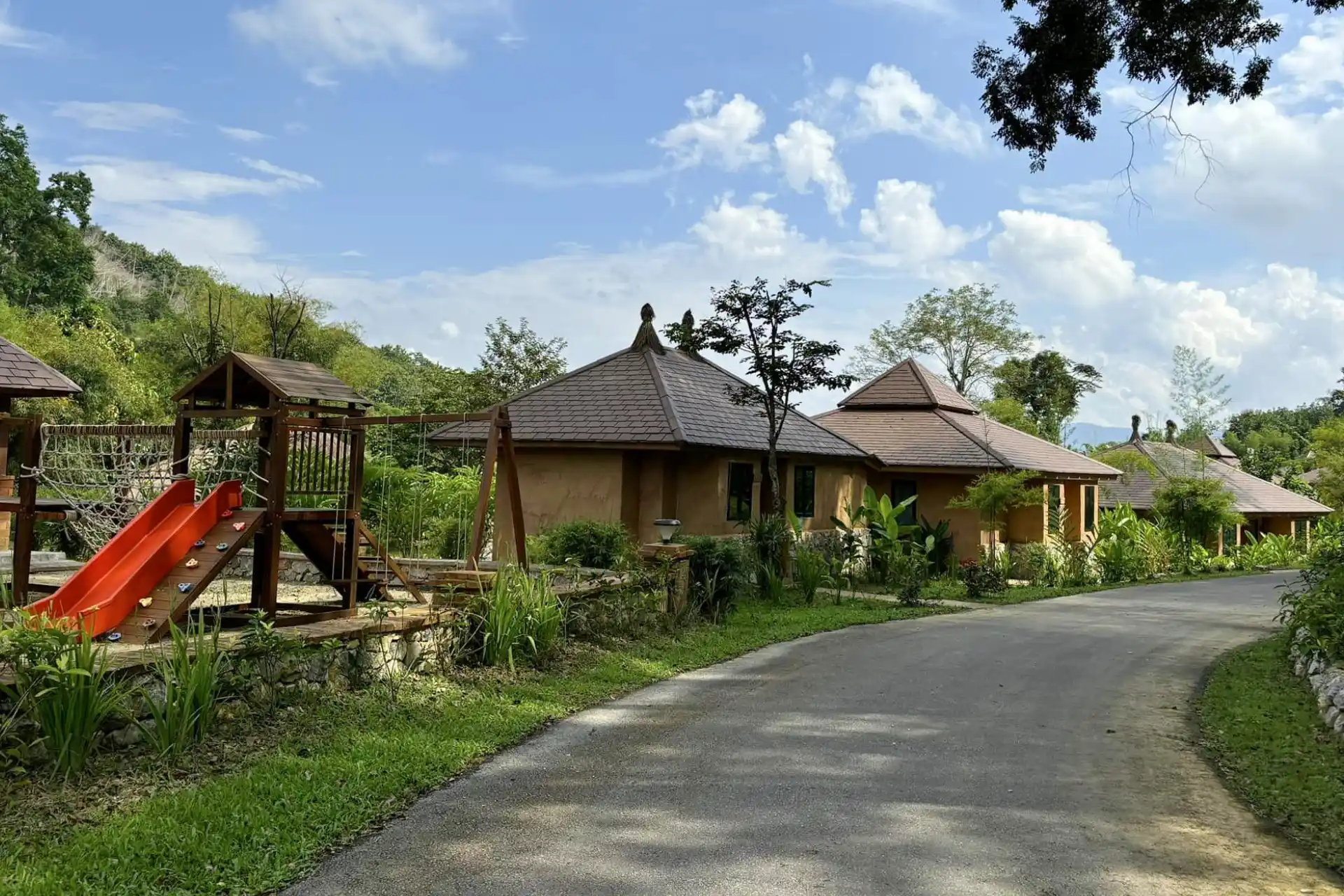
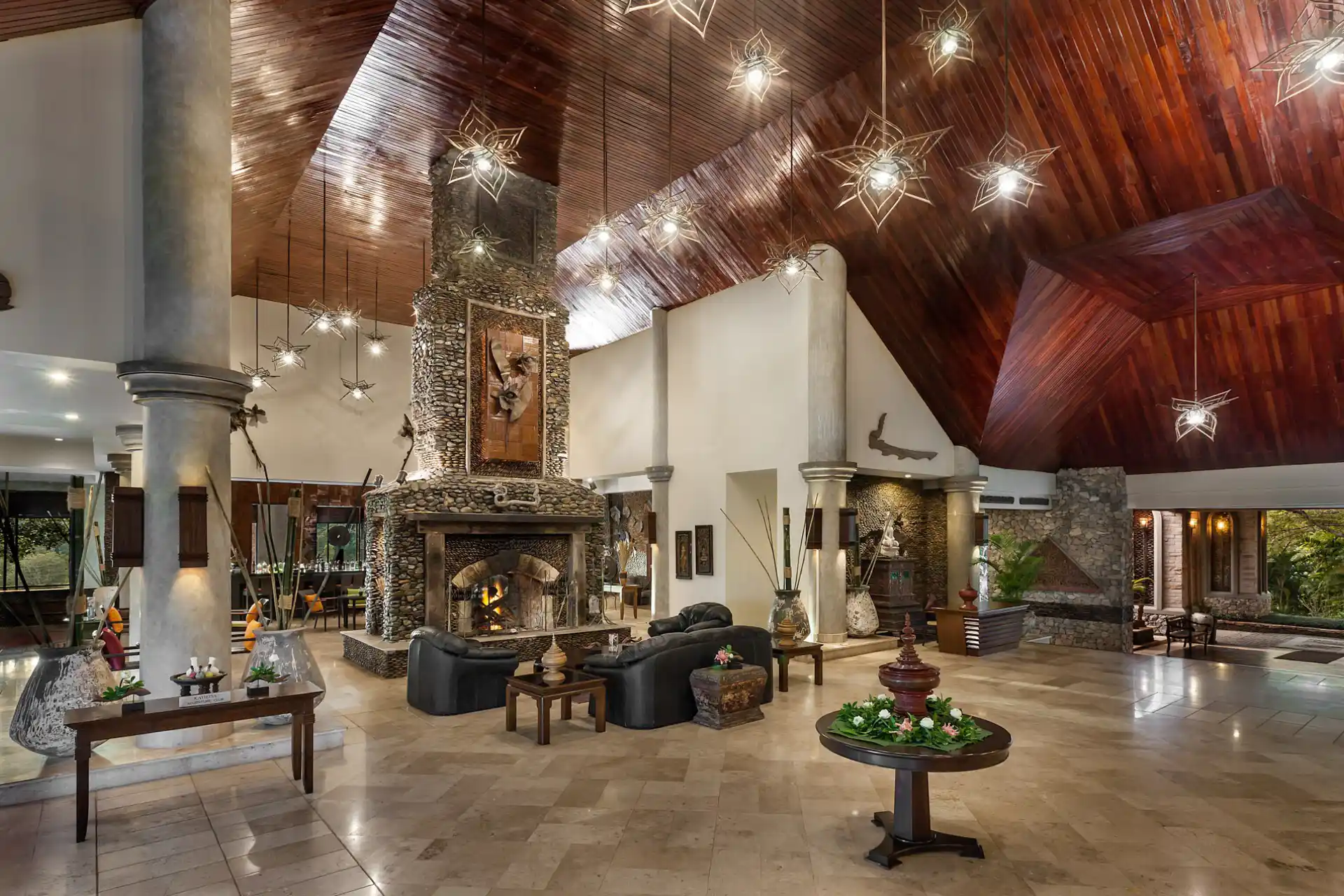
That is where the Katiliya estate comes into its own. After a day of mirrored spires and cobalt halls, there is real joy in returning to the cool of the mountains — a stroll through the nature park, a treatment in the spa, a quiet dinner under the stars. Whether you stay at the Mountain Resort & Spa or the Park Villas, the entire estate is yours to enjoy, spa and dining included, so the calm of your evening is never compromised.
Chiang Rai’s temples are among the most remarkable sights in Thailand. Give them the unhurried day they deserve — and a beautiful place to rest your head afterwards.
Planning your temple day? Book directly with Katiliya for our best available rates and full access to the estate, and let us help you build the perfect northern itinerary around it. >> BOOK NOW